
Insight
GLP-1 Prior Authorization: What Care Teams Should Prepare
As GLP-1 prescribing and coverage considerations evolve, care teams may face different prior authorization (PA) requirements across therapies, indications and health plans. Understanding what may be requested before beginning can help teams prepare and move the request forward. Electronic Prior Authorization (ePA) with CoverMyMeds surfaces plan-specific requirements within the workflow, so you can complete and submit GLP-1 prior auth requests efficiently and help reduce the need for rework.


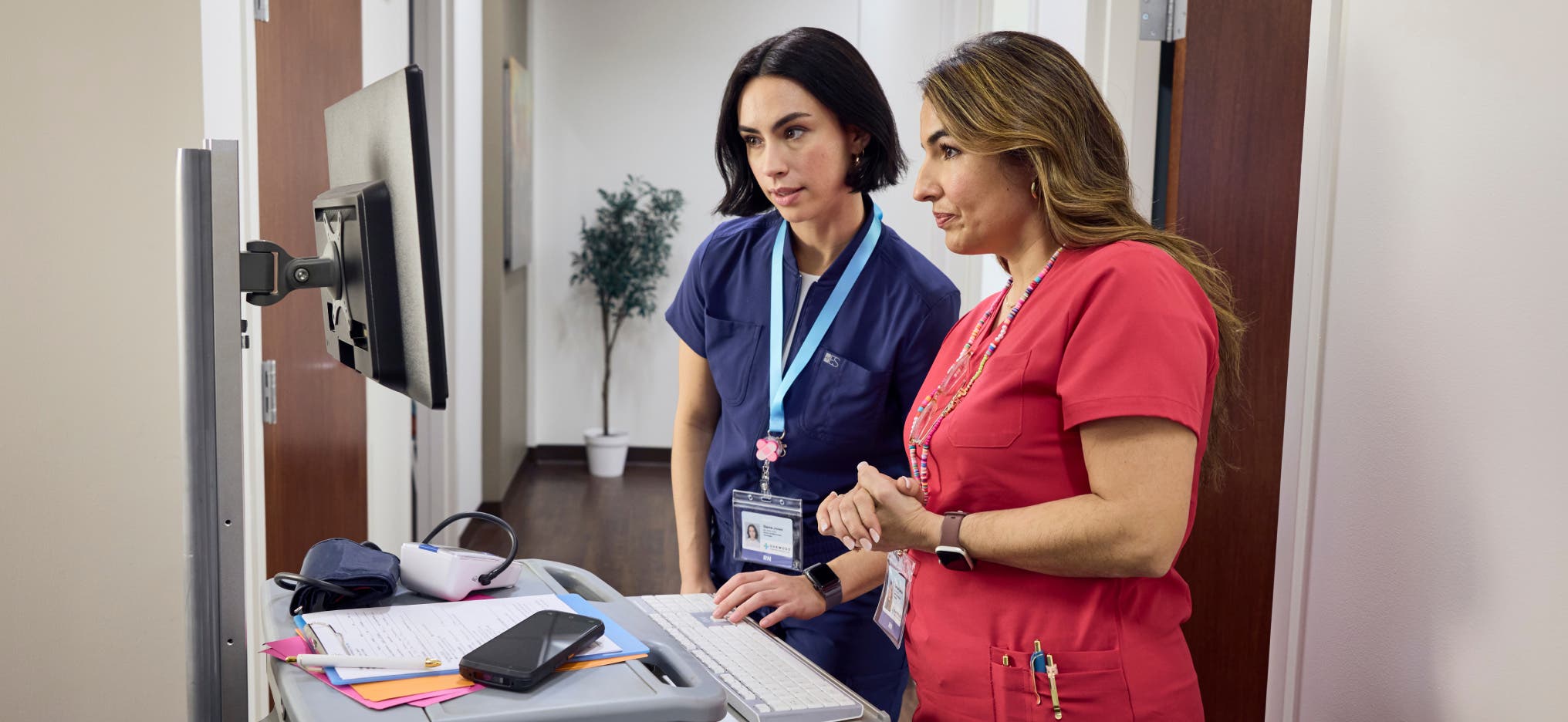
GLP-1 prior auth requirements can differ from plan to plan and even from patient to patient because of the biological complexity of the drug class, where therapies and indications are also evolving quickly. This makes preparation a critical step before submitting a prior auth for a GLP-1 medication. Doing so can help your team avoid delays caused by missing information.
CoverMyMeds can help you further by guiding you through your GLP-1 prior auth and surfacing requirements specific to the patient’s health plan and therapy where available, so you can address what’s needed as part of the workflow rather than looking up each health plan and PBM’s criteria on your own.
Prior auth requirements for GLP-1 therapies are not uniform. They may differ by the specific therapy prescribed, the indication, the patient’s health plan and the plan’s current formulary status. Some plans require step therapy, specific clinical documentation, or proof of previous treatments. Because formularies and coverage criteria continue to evolve, what was required for one patient may not match what’s needed for the next. These variations make preparing a complete submission beforehand that much more important.
Learn more about GLP-1 PA requirements.
How to prepare a GLP-1 PA request
A complete GLP-1 prior auth request starts with the right information. While requirements vary by plan, most requests share a similar foundation. Here’s what your care team can prepare in advance, and how CoverMyMeds can help once you start the request:
-
Compile clinical documentation, including any step therapy the patient has completed. Plans commonly request copies of relevant clinical notes supporting the diagnosis. Some may also require documentation of previous treatments or step therapy attempts. Having these organized helps your team move through the request efficiently once you start.
-
Confirm the therapy and indication. Verify the specific GLP-1 indication, therapy brand, dosage, quantity and day supply being prescribed, as requirements may vary. A plan that will approve a 90-day supply might deny a 30-day prescription, for instance, or vice versa.
-
Gather patient and prescriber details. Most requests require patient demographics (such as name, date of birth and member ID), prescriber information (such as name, NPI and contact details), and the pharmacy where the prescription will be filled. Having these ready reduces back-and-forth during submission.
None of this guarantees a particular outcome, since coverage decisions are made by the health plan and PBM. But a complete, well-prepared request can reduce avoidable delays and rework.
When you’re ready to start, CoverMyMeds will guide you through the workflow so you can submit with confidence. The portal identifies each required field based on the patient’s health plan and therapy, helps you submit electronically, and provides status visibility as the request moves toward a determination. You can also monitor the request, respond to any follow-up from the plan, and notify patients of the outcome at the same time as your team, all within the portal or your connected EHR.
Prior authorization considerations for oral GLP-1 therapies Prior auth requirements may also apply to oral GLP-1 therapies and may vary by therapy, indication and health plan. Care teams should follow the same preparation steps outlined above and confirm that the request reflects the prescribed formulation. CoverMyMeds supports electronic PA workflows for both oral and injectable GLP-1 therapies.
Common submission challenges Understanding why GLP-1 prior auth requests may be delayed or returned can help your team prepare a more complete submission. The challenges below come with practical steps to address them, and the CoverMyMeds portal supports several of them directly.
Why are GLP-1 prior authorizations delayed or returned? A request may be delayed or returned when required information is missing or the submission does not reflect the applicable plan requirements. CoverMyMeds helps minimize these errors by guiding prescribers through the correct forms and highlighting any problems or callouts, so your team can address gaps as part of the request rather than after submission.
What steps can providers take to receive a GLP-1 determination more quickly? Using electronic workflows to submit proactively, rather than waiting for a pharmacy rejection, can help your team avoid a common source of delays. With connections to 50,000 pharmacies and to health plans across the network, CoverMyMeds provides status visibility so you can respond to follow-up requests quickly, and patients can access medication up to 13 days sooner.
What happens when formulary requirements change? Because coverage and PA requirements can change, care teams should begin a new request using the appropriate electronic PA workflow rather than relying on information from a previous patient or submission. CoverMyMeds provides the current requirements on both the provider and pharmacy side of the PA workflow, so outdated criteria don’t contribute to delays. When integrated with your EHR, that connectivity helps your team access updated requirements within your system, without switching between portals. This is also what makes electronic Prior Authorization work, as the next section explains.
How electronic Prior Authorization supports GLP-1 PA requests Through your EHR or the CoverMyMeds portal, your care team is connected to an established network of health plans, pharmacies and EHR systems within a shared prior auth ecosystem. That connectivity is what makes CoverMyMeds ePA work: your team can quickly prepare, submit and monitor GLP-1 prior auth requests through the workflows you already use, instead of tracking down each plan’s criteria manually or waiting for a pharmacy rejection.
CoverMyMeds ePA helps your team:
- Access prior auth without switching between systems
- Navigate the process with less friction
- Reduce the manual entry that can slow things down
- Minimize the back-and-forth between parties
- Keep the request moving toward a determination
More than 1 million providers are actively connected to the CoverMyMeds network, and 50,000 pharmacies support medication access from prescribing to dispensing. With 350+ EHR integrations and coverage across 96% of prescription volume, your team can complete a GLP-1 PA and submit it electronically through a single workflow, whether the request is provider-initiated or a response to one started by a pharmacy, and gain visibility into authorization status from preparation through submission.
CoverMyMeds support for the Medicare GLP-1 Bridge Program
The Medicare GLP-1 Bridge Program is a CMS initiative that provides eligible Medicare Part D beneficiaries access to certain GLP-1 medications. CoverMyMeds provides operational workflow support, allowing patients to move from coverage to therapy. CoverMyMeds is connected operationally through Humana, which has contracted with CMS to serve as the central processor of the Medicare GLP-1 Bridge Program.
CoverMyMeds does not determine patient eligibility or coverage, administer the program, or serve as the exclusive PA submission channel. Care teams should refer to CMS guidance for current eligibility criteria, covered therapies and program requirements.
Frequently asked questions
Common questions about GLP-1 prior auth preparation, requirements, and how electronic PA fits into the workflow.
1. What steps help a provider prepare a complete GLP-1 PA request? Start by confirming the specific therapy and indication, as requirements may vary by both. Compile clinical documentation supporting the diagnosis, and gather patient and prescriber information (see above). When your team starts the request, CoverMyMeds surfaces plan-specific requirements and guides you through the required fields based on the patient’s health plan and therapy, so you can address what’s needed as part of the workflow.
2. How do PA requirements vary across GLP-1 therapies and health plans? Requirements may differ by therapy, indication and health plan. Some plans require step therapy, specific clinical documentation, or proof of previous treatments. Formulary status can also affect what’s required. Because these requirements continue to evolve, what was stipulated for a previous patient or submission may not match what’s needed now. When your team starts a request, CoverMyMeds presents current requirements as you go, so you can address them without tracking down each health plan and PBM’s criteria separately.
3. What role does electronic Prior Authorization play in GLP-1 access? ePA lets providers submit and manage PA requests through a digital portal rather than dealing with paper forms or back-and-forth phone calls. CoverMyMeds connects providers to plans and pharmacies so requests can be initiated, completed and monitored in one place, often within the EHR system the care team already uses. In-portal guidance walks you through each required field based on the patient’s health plan and therapy, helping reduce manual entry and the errors that can come with it. ePA helps your team navigate the process smoothly, surface what’s needed, and keep the request moving toward a determination.
4. What PA considerations apply to oral GLP-1 therapies? As with other GLP-1 therapies, oral GLP-1 can have prior auth requirements that may differ by therapy, indication and health plan. If your team is preparing a PA request for an oral GLP-1, the same steps apply: gather clinical documentation, confirm the therapy and indication, and have patient and prescriber details ready. CoverMyMeds can help your team identify what may be needed for an oral GLP-1 request just as it does for other therapies in the class, surfacing plan-specific requirements so you can complete the request efficiently.
5. How do formulary updates affect GLP-1 prescribing workflows? When a health plan updates its formulary, the prior auth criteria for GLP-1 therapies may change. A request that would have been complete under the previous criteria may be missing information under the updated requirements. When your team starts a new request, CoverMyMeds shows what may be needed under the current criteria so you can adjust as you prepare a complete submission.
6. Does CoverMyMeds support the Medicare GLP-1 Bridge Program? CoverMyMeds supports certain operational workflows associated with the program, including available ePA connectivity. Refer to current CMS guidance for more information.
Ready to start a GLP-1 PA?
You’ve reviewed what to prepare, why requirements vary and how electronic Prior Authorization can help your team navigate the GLP-1 PA process with fewer delays and less rework. When your team is ready to move from preparation to submission, CoverMyMeds connects you to the electronic PA pathway:
- Log into CoverMyMeds to start a request or continue one in progress
- Create an account if you don’t already have one
- Or go to the GLP-1 PA resource page to learn more
- Need Help? Chat with our support team at covermymeds.health
With in-portal guidance, EHR integration and a connected network of health plans and pharmacies, CoverMyMeds helps your team prepare a complete request, submit it electronically and monitor it through to determination.