
Insight
What We Learned at HIMSS 2026: The Future of Specialty Care
HIMSS always provides a snapshot of where healthcare is heading -- not in five years, but right now. HIMSS 2026 made one thing impossible to ignore: the industry is in the middle of a pivotal transition, driven by AI, automation and the accelerating complexity of specialty care.
Across keynotes, exhibit hall conversations and hands-on demos, the message from health systems, technology leaders and innovators was consistent: specialty care teams need simpler, more connected ways to move patients from prescribing to therapy initiation and their expectations are changing fast.
As someone who spends every day working with provider organizations, health systems and EHR partners, this year’s conference felt like a clear turning point. Connectivity, interoperability and intelligent automation are now baseline expectations.
CoverMyMeds came to HIMSS ready for that shift, and what we heard this year reinforced just how essential that work is.




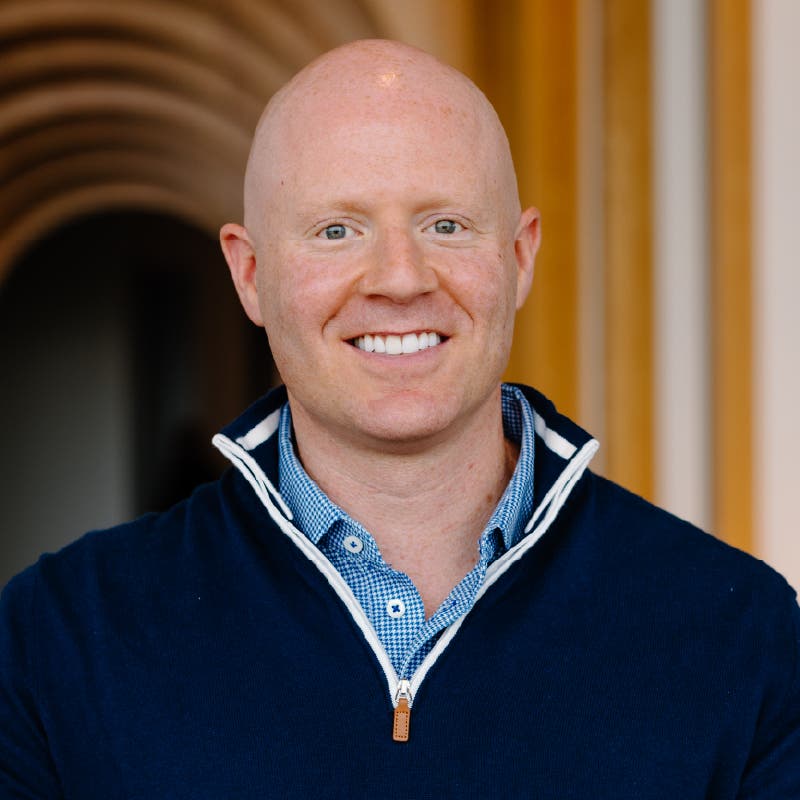
Vice President of Network Operations
AI and Automation Took Center Stage
Established organizations are wrestling with decisions about whether to buy, build or partner, while startups (moving quickly and aggressively investing) are pushing the conversation forward.
But even with all the noise, one expectation surfaced repeatedly: Providers now want the same intuitive, ChatGPT-like experience inside their EHR workflows.
The dialogue around agentic AI (AI agents performing tasks on behalf of care teams) was especially notable. Leaders see the promise, but they’re also asking the right question: How will humans remain in the loop?
At CoverMyMeds, we’ve long believed that AI and automation must strike a balance:
- Automation for deterministic tasks like validating patient identifiers
- True AI for reading unstructured data, interpreting clinical notes and guiding complex access workflows
HIMSS 2026 confirmed that the industry is ready for both as long as they’re embedded where clinicians already work.
Fragmentation Is Still the Enemy. Especially in Specialty
The shift toward specialty therapies was front and center at HIMSS. With more complex medications hitting the market, care teams are juggling fractured tools, disconnected forms and inconsistent access steps.
Providers shared a simple but urgent question: “When will someone fix this?”
The answer can’t be another isolated solution. Health systems want:
- Workflows that originate inside their EHR
- A unified starting point regardless of benefit type
- Consistency across pharmacy and medical PA
- Tools that scale with growing therapy complexity
At our booth, conversations quickly gravitated toward how Specialty Access and Affordability Solutions solves exactly this. Not by replacing everything overnight, but by creating a scalable foundation for the entire access journey in one place. To learn more, check out this press release.
Connectivity Is Becoming a Market Divider
While startups are innovating rapidly, many acknowledged they lack the broader ecosystem connections required to scale: payer connectivity, pharmacy integrations, EHRs and more.
This is where established networks matter. Healthcare leaders were clear: they need partners with proven relationships and the infrastructure to close the loop between prescribers, plans and pharmacies.
For CoverMyMeds, our longstanding network (across EHRs, payers and pharmacy partners) resonated strongly. Health systems want tools that work reliably inside their environment today, not tools that require rebuilding their processes tomorrow.
Trust in Health Care Now Depends on Interoperability and Scalability
One of the strongest emotions expressed at HIMSS was skepticism. Many organizations have been promised “seamless integration” only to encounter disruptions, limited configurability or tools that simply can't handle medical benefit workflows.
This is why combining medical and pharmacy PA workflows into a single, EHR-embedded experience sparked so much interest at our booth. It wasn’t seen as a point-solution upgrade, it looked like the future of how access should function.
Providers repeatedly told us: “This is what we’ve been waiting for.”
That validation means a lot because trust in health care is earned one workflow at a time.
Major Market Signals: GLP1s, Business Models and Big Tech
HIMSS also highlighted shifts beyond technology:
- GLP1 accessibility and pricing pressures
- New business models, including direct-to-patient models from manufacturers
- The need for infrastructure that can adapt as therapies evolve
- Market speculation around major players potentially restructuring or divesting assets
These signals reinforced something we’ve believed for years: health care teams need flexible, connected, resilient systems. Not one-off tools.
HIMSS Reinforced Our Responsibility
This year’s conference was more than a showcase of innovation; it was a reminder of what’s at stake.
Clinicians are overwhelmed. Specialty care is accelerating. And patients can’t wait for therapy because systems are disconnected.
At CoverMyMeds, we’ve spent nearly two decades building the infrastructure to fix that. HIMSS 2026 reaffirmed that our role is not to chase technology for the sake of novelty, but to solve the real workflow challenges that stand between patients and the treatments they need.
Looking Ahead
What became clear at HIMSS is that patient access is now too complex for disconnected tools. The future belongs to platforms that:
- Integrate directly into the EHR
- Unify medical and pharmacy benefit workflows
- Leverage automation and AI intelligently
- Scale with the complexity of specialty care
We’re proud to be helping build that future and even more excited about what it means for care teams and the patients they serve.